


How Do You Choose The Right Wide-format Laminator?
Sep 16, 2026
Leave a message
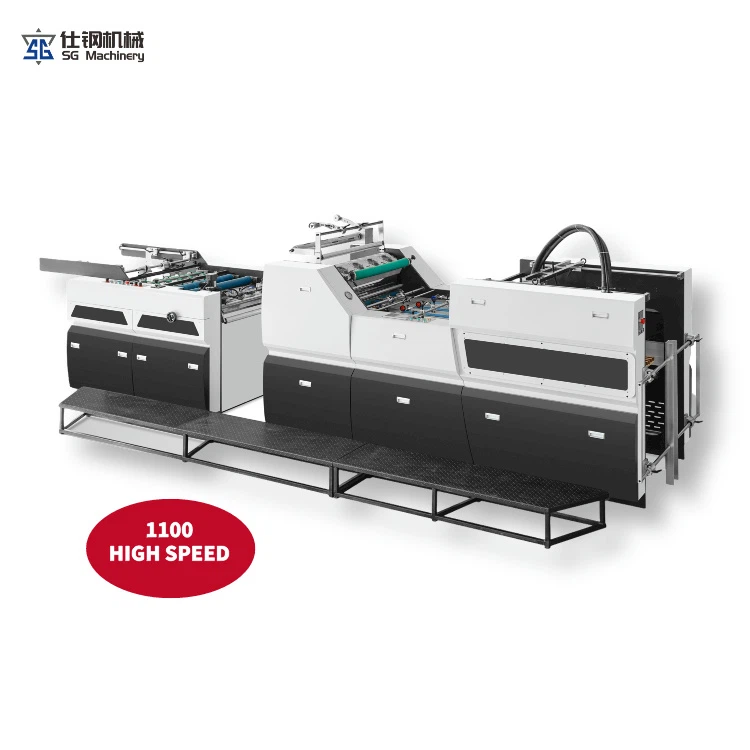
Selection the right wide-format laminator requires comprehensive evaluation based on processing materials, product dimensions, lamination width, production speed, lamination processes and automation. Different enterprises have different production tasks, so the requirements for wide-format laminators are different. For businesses involved in advertising, printing, packaging, signage and decorative materials processing, choosing the appropriate equipment not only improves the quality of the film, but also minimizes material waste and reduces the time required for manual adjustment.
1.Equipment selection based on Lamination Materials
When choosing a wide-format laminator, the material to be processed must be identified first.
Common materials include paper, polypropylene, PVC, photographic lithography, large-format inkjet prints, self-adhesive materials, advertising films and some composites. These materials vary in thickness, flexibility, surface finish and heat resistance, requiring specific lamination pressure, temperature and speed settings.
Therefore, before you purchase a wide-format laminator, you should provide the manufacturer with details of the materials you intend to use to ensure that the device can be reliably the lamination process.
2.Selection based on Maximum Lamination Width
"Wide format" is a defining characteristic of these laminators; therefore, the machine's maximum lamination width must be consistent with the size of the actual product.
If you mainly deal with narrow advertising graphics and printed materials, the machine is suitable for the corresponding width. However, if you need to deal with large advertising graphics, exhibition materials, or wide-format scrolling media, you will need models with greater work breadth.
It is important to note that device selection should not be based solely on the size of the current product, but should also consider possible future product specifications. Allowing for additional processing width is good for future business expansion.
3.Lamination Speed Compensation Selection Based on Yield
For enterprises with high production volumes, the speed of operation of broad-band cladding machine is a crucial factor.
While higher machine speeds implies greater theoretical production capacity, actual efficiency is influenced by factors such as material feeding, tension control, lamination temperature, operator proficiency and the time required to replace the roll.
If your business is focused on mass, continuous production, a high-speed wide-format laminator are a strong candidate. Conversely, if product specifications vary frequently and orders are small, the equipment's flexibility is just as important as ease of adjustment.
Therefore, rather than simply pursuing maximum production speed, it is better to choose based on actual daily or monthly production. Selection based on Lamination Process
Wide-format laminators can adopt different lamination methods according to specific technological requirements.
Some machines, for example, are designed for thermal lamination, which relies on heat to bind the bonding film to the substrate, while cold lamination utilizes pressure to hold the material together. Different processes have different requirements for the compatibility of materials and membranes.
If a company processes a wide range of products, it must verify in advance the laminating methods supported by the equipment and whether temperature, pressure or speed are required for different film materials.
4. Focus on Temperature Control and Pressure Regulation
Temperature control is the key thermal lamination equipment.
Insufficient temperature will lead to insufficient adhesion between the film and substrate, resulting in poor adhesion or edge lifting problems. On the contrary, excessive temperature may lead to material deformation, film damage or surface defects.
Pressure also has a big impact on lamination quality. Insufficient pressure can lead to uneven air bubbles or adhesions, and excessive pressure can affect the surface quality of the diluent.
Therefore, when selecting a wide-format laminator, the heating system, temperature control mechanism and lamination pressure adjustment capabilities of the device should be carefully evaluated.
5. Consider Tension Control Capabilities
tension control is the key factor that affects the flatness of the sheet for a wide coil.
During unwinding and unwinding, unstable tension can lead to material misalignment, wrinkling, stretching or curling. Stable tension control is very important in the process of high-speed lamination operations.
Therefore, companies that regularly process broad-band reels should prioritize equipment with stable unwinding, traction and reeling systems, and should be aware of the specific tension adjustment methods employed.
6. Selection based on Level of automation required
Different production patterns require different degrees of automation.
For enterprises mainly engaged in small batch production and high variety production, wide-specification composite machines with flexible operation and convenient adjustment are often the best choice. For mass production and continuous production, automatic loading, automatic web guiding (alignment) and automatic rewinding should be considered.
Increased automation can reduce manual labour and improve production consistency; however, increased complexity of equipment often leads to increased procurement and maintenance costs.
Therefore, automation specifications should be selected according to actual production needs, rather than simply seeking to maximize functionality. Focus on Lamination Quality and Equipment Stability
When choosing a broad-band cladding machine, you can't just look at the price, long-term stability is just as important.
During actual test, we should pay attention to the smoothness of laminating, and check for air bubbles, wrinkles, layering, dislocations, and weak edge adhesion. In addition, the processing results of different velocities and materials are assessed.
For enterprises that require continuous production over a long period of time, stable equipment operation is often more important than peak speeds in a short period of time.
Conclusion:
Choosing the right wide-format laminator requires a thorough evaluation, not just price or maximum speed. Key factors to consider include lamination width, processing material, production speed, lamination processes, temperature control, pressure regulation, tension control, automation levels and after-sales service.
Advertising and printing companies should prioritise the ability of equipment to handle large size materials and ensure lamination flatness. On the contrary, mass production enterprises should pay attention to processing speed, continuous operation stability and automation level.
In the actual procurement process, sampling test of the actual material is an important method to determine the suitability of the equipment. Only if the equipment specifications are in line with actual product and production requirements can the production efficiency and processing advantages of broad-band laminators be fully realized.