


How Do Wide-format Laminators Ensure Lamination Flatness And Bonding Quality?
Sep 23, 2026
Leave a message
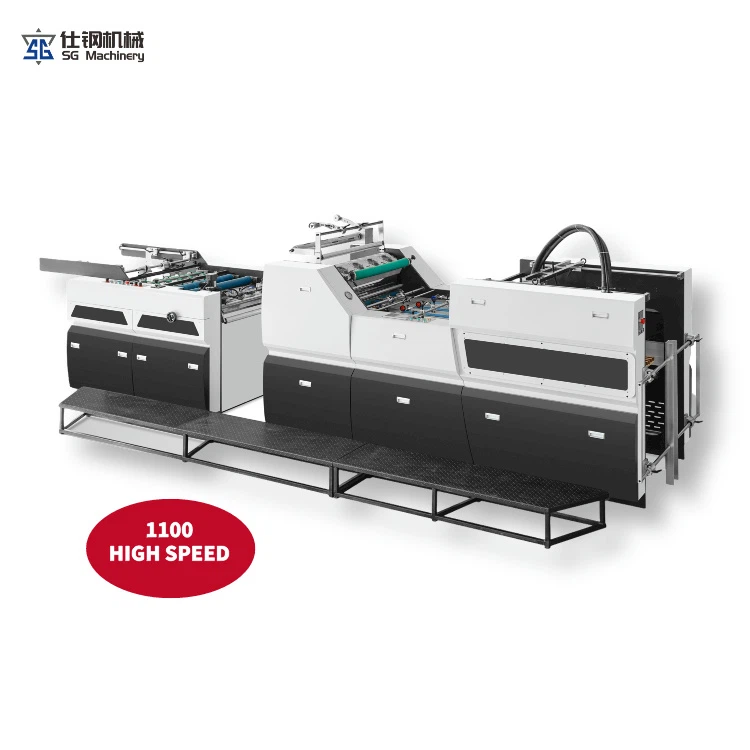
Wide-format laminators are widely used in advertising production, printing, packaging, signage, graphic output and other industries. They are mainly used to bind protective, decorative or functional membranes to substrates such as paper, polypropylene, PVC and large print media. For wide-format materials, the larger the laminar area, the higher the requirements for operating stability, material tension, lamination pressure and temperature control. Improper parameter settings can easily lead to air bubbles, wrinkles, edge curling and poor adhesion.
Therefore, in order to obtain a smooth, secure lamination finish, several factors such as material preparation, tension control, pressure adjustment, temperature regulation, lamination speed and equipment precision need to be comprehensively controlled.
1.Keep substrate surface smooth and clean;
Before laminating, the surface condition of laminating material must be inspected. If there is dust, oil, moisture or a noticeable fold on the substrate surface, air bubbles or local bonding defects may occur during this process.
Paper, advertising graphics and printed materials must be pretreated to ensure smoothness and surfaces must remain dry and clean. It roll materials also essential to check for curling, curling and uneven thickness.
Good condition of the substrate is the use of a wide-format laminator to achieve smoothness.
2.Proper control material tension
In the process of wide-format lamination, the material is usually fed continuously. If the tension is too high, the material will stretch, deform or contract as it enters the lamination zone; if the tension is too low, the material will relax, drift or wrinkle.
Therefore, the tension of the laminator must be adjusted according to the thickness, width and material properties of the substrate to ensure that the material remains stable as it enters the lamination zone.
Tension control is particularly important for wide rollers; as the width of the material increases, slight variations in tension are magnified, ultimately affecting the the flatness of the entire plate.
3. Make sure uniform lamination roller pressure.
The lamination roller is responsible for pressing the film and substrate together, and the uniformity of the pressure directly affects the bond quality. If the pressure on both sides of the laminated drum is not uniform, the material may appear diagonally wrinkled or air bubbles during use, with one side of the material well bonded and the other poorly bonded.
Therefore, the width machine must maintain a good roll parallelism, and according to the thickness of the material and the requirements of the plate pressure adjustment. Pressure does not have to be greater than good, pressure must be high enough to ensure proper adhesion, while avoiding material indentation or deformation problems.
4. Proper control of lamination temperature.
In thermal lamination processes, temperature directly affects the fluidity and bonding quality of the adhesive layer.
If the temperature is too low, the adhesive layer may not be fully activated, resulting in a weak bond between the film and the substrate. Conversely, if the temperature is too high, the film will deform or contract, or even damage the substrate.
Therefore, the operator must set the appropriate operating temperature according to the specific film material, substrate and adhesive type.
In addition, the heating zone of a broad-band composite machine should be evenly distributed. Differences in temperature of different widths can lead to inconsistent bonding quality in different regions.
5. Control lamination speed
Lamination speed also affects the end result.
If the equipment runs too fast, the material's residence time in the laminate zone may be reduced, which may lead to insufficient heating or pressure. If the speed is too slow and the material is exposed to high temperatures for long periods of time, production efficiency can be affected.
In practical production, adjustments should be made based on a combination of parameters --such as thin film materials, substrate, temperature and pressure --rather than simply pursuing higher lamination speeds.
A steady operating speed helps minimize material fluctuations and ensures the lamination process.
6. Minimize misalignment and transverse wrinkles
Wide format materials are prone to dislocation during continuous transport. If the material deviates from the correct path, the lamination position may shift, which can lead to diagonal wrinkles.
Therefore, wide-format laminating machines usually require reliable guiding and web-guiding mechanisms to maintain the correct path between the substrate and the film.
In addition, the installation precision of unwinding, guide roll and laminating roller will also affect the movement of the material. Maintaining good parallelism between machine rollers helps to reduce lateral movement of materials during transport. Choose Compatible Laminating Films and substrates
Not all laminates are compatible with the same lamination parameters.
Different types of protective films, such as PET, PVC and PP, vary in thickness, flexibility, surface properties and adhesion. Similarly, the surface properties of various paper stocks, advertising materials and plastic substrates vary.
Therefore, when selecting a wide-format laminating machine, it is important to ensure that the equipment matches the specific films and substrates used and that temperature, pressure, speed and tension are adjusted according to the material characteristics.
Sample testing prior to full production helps to identify material compatibility issues early.
8. Keep Laminating Rollers and equipment clean
If adhesives, dust or other impurities stick to the surface of the laminating rollers, it directly affects the bonding quality between the substrate and the film.
For example, particles on the surface of the drum can produce local bumps in the finished product, and adhesive residue can lead to surface irregularities.
As a result, wide-format laminating machines require regular cleaning of laminating rollers, guide rail pressers and transport components in accordance with operating guidelines, as well as checking for wear or damage on the surface of pressers.
9.Optimal Parameters determined through sample testing
There is no common set of lamination parameters applicable to all materials and products.
Actual substrates and films should be tested before full-scale production begins. By looking at the flatness, adhesion and clarity of the laminated product-and checking for defects such as air bubbles or creases-operators can fine-tune temperature, pressure, tension and speed.
Determine stable process parameters before mass production to minimize material waste and improve overall production efficiency.
Conclusion:
Achieving excellent flatness and bonding quality in wide-format lamination does not depend on a single component, but on synergy between equipment precision, material conditions and process parameters. The final quality of laminates is important for the cleanliness and leveling of substrates, the stability of tension, the uniformity of roller pressure, the accuracy of temperature control and the proper operating speeds.
In addition to the maximum width and speed wide-format laminating machines folding machine, the focus should be on tension control, pressure adjustment, temperature regulation, web guiding capabilities and overall stability of the equipment. For professional thin film or substrate materials, it is recommended that you use actual materials for sample testing prior to purchase to select a wide-format laminator best suited to your specific production requirements.