


How Can Wide-format Laminators Reduce Issues With Air Bubbles And Wrinkles?
Oct 28, 2026
Leave a message
Common quality quality defects using wide-format laminators to process large sheets of paper, prints, advertising graphics, decorative materials, or other substrates include air bubbles, wrinkles, or poor local adhesion. These defects not only affect the the product's appearance, but also break the bond between the film and the substrate.
Bubbles and folds are rarely caused by a single factor; they can be caused by a combination of variables including film tension, lamination pressure, operating temperature, feed rate, substrate surface condition and equipment setup accuracy. Therefore, addressing these issues in a production environment requires an integrated approach that takes into account materials, equipment and processes.
1.Maintaining stable membrane tension
Thin film tension is a key factor affecting the quality of wide-format lamination.
If the tension is too low, the film may slacken, wobble or pile up during feeding, causing wrinkles once in the the lamination (nip) zone. Conversely, if the tension is too high, the film may stretch and deform, which may lead to subsequent shrinkage or curling of the edges after the lamination process is complete.
Therefore, tension settings should be carefully calibrated according to the material, thickness and width of the film. When approaching the the lamination zone, it is important to ensure that the film remains smooth and even.
For wide-format materials, the uniformity of tension across the width is particularly important. Equipping the machine with a stable tension control system helps to minimize possible fluctuations caused by manual adjustment.
2.Optimizing Lamination Pressure
The lamination rollers must apply sufficient and uniform pressure to ensure adequate contact between the film and the substrate.
If the pressure is too low, the film may not fully bind to the substrate, leaving trapped air in the form of bubbles. If the pressure is too high, the material will cause deformation, damage to the film, or uneven distribution of the adhesive layer.
There is a misconception that higher pressure, the better, and the settings should be adjusted according to the thickness of the substrate, the specific characteristics of the film and the lamination process requirements.
3. If local air bubbles occur, check for consistent pressure at both ends of the lamination rollers and for foreign objects, signs of wear or irregularities on the roller 3. Maintain an Appropriate Lamination Temperature
During thermal lamination, temperature setting directly influences the flow and bonding characteristics of the film and its adherent layer.
If the temperature is too low, the adhesive layer may not be sufficiently activated, resulting in a weak bond between the film and the substrate, which can easily lead to air bubbles or localized delamination. Conversely, if the temperature is too high, the film may deform or contract, which may affect the surface quality of the printed material.
The actual temperature should not be based on a single fixed value, but should be adjusted by taking into account factors such as the type of film, the material of the substrate, the speed of operation of the equipment and the specific properties of the adhesive layer.
If the equipment has a zoning temperature control function, it is important to ensure that the temperature of different sections is stable to prevent inconsistent the lamination quality due to excessive temperature differentials.
4. Properly Control Feeding and Lamination Speed
The speed of operation of the device also affects the degree of adhesion of the film to the substrate.
If the speed is too high, the material will spend less time in the (pressing) zone. If the temperature and pressure are not adjusted accordingly, the adhesion is insufficient or the air is trapped.
If the speed is too slow, the material can be exposed to high temperatures for too long, which can lead to film deformation or other mass problems.
Therefore, speed, temperature and pressure must be carefully balanced in production process. When switching to different materials, do not simply reuse previous production parameters; instead, perform test laminations and make incremental adjustments.
5. Keep substrate and film surfaces clean
The presence of dust, paper scraps, oil or other foreign matter in the lamination zone can easily cause local lumps or air bubbles.
Before production, the surface of the substrate should be verified to ensure that there is no obvious contamination on the surface of the film. If the substrate accumulates large amounts of paper debris during printing, cutting or transport, it must be cleaned prior to lamination.
For the long-term storage of the film, should inspect its surface condition, and check for moisture absorption, deformation and other problems.
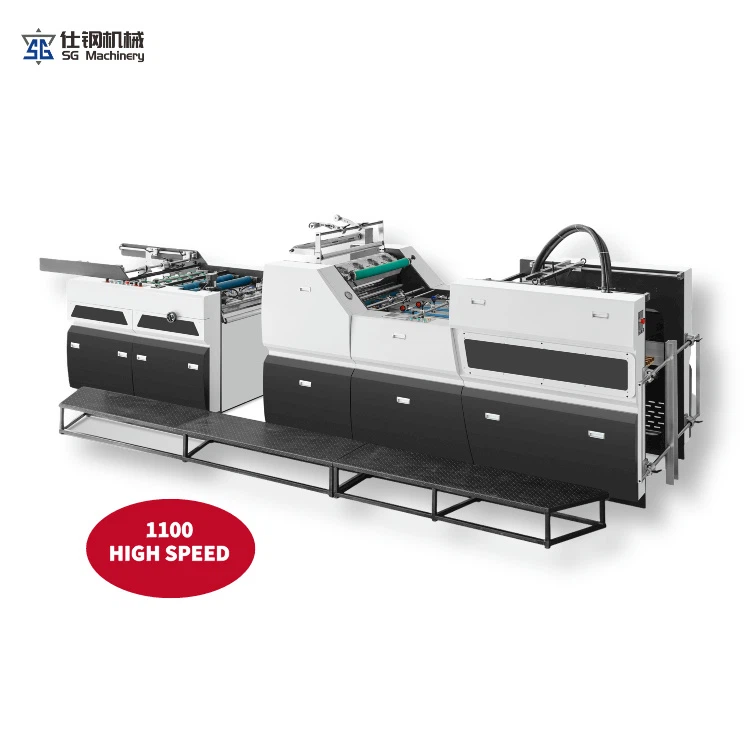
6. Check the Flatness of the film and substrate
If the material itself exhibits significant curvature, deformation or uneven thickness, folds may occur during laminating. For wide-format materials, the larger the transverse width, the higher the general requirements for flatness and tension. If the tension in the film's coil width is inconsistent-for example, if the edges are looser or tighter than the center-the material can drift (serpentine) or create local wrinkles once inside the machinery.
Therefore, before production, the condition film rolls and substrates should be inspected. If the material is significant deformation, it must be treated or replaced with a material that meets the requirements.
7. Adapt the Web Guiding System as appropriate
If the film or substrate keeps drifting to one side during wide-format lamination, it is easy to edge wrinkling.
For equipment with an automatic edge guide (edge-alignment) system, parameters must be correctly configured according to the width and working state of the material. Too much correction can cause the material to swing back and forth, so the guiding effect should be stable.
If the material continues to drift over a long period of time, the problem should not be solved simply by increasing the sensitivity of the navigation system. Instead, we should examine the parallelism of the guide rollers, the condition of the pressure roll, and the uniformity of the material winding.
8. Testing of Precision of roller and equipment
Nip rollers is the key part which directly influences the quality of the roller.
If there are scratches, residue or wear on the surface of the drum, the film pressure distribution will be uneven, resulting in air bubbles or wrinkles. In addition, if nip rollers is not completely parallel, the pressure may be too high on one side and insufficient on the other.
Therefore, according to the maintenance requirements of the equipment, regular cleaning and inspection of the drum, guide drum and related driving components.
For long-used wide-format laminators, the presence of air bubbles or folds in a specific area under repeated adjustments may indicate a change in the mechanical accuracy of the equipment.
Frequently Asked Questions
Q1: What are the most common reasons for air bubbles in wide-format lamination?
Common causes include unstable film tension, insufficient pressure on the head, inadequate temperature, too fast feeding, or dust on the substrate or film surface. The root cause should be identified through the analysis of specific production processes.
Q2: What are the first adjustments to wrinkles during the patch process? It is recommended to observe the position and formation pattern of any fold, then check the tension of the film, the smoothness of the material, feeding state and the operation of the guide rollers. Significant adjustments to individual parameters are not recommended.
Q3:Higher lamination pressure, the less likely is the air bubbles to form?
Not necessarily. When the pressure is insufficient, it may lead to inadequate adhesion, and when pressure is too high, it may lead to deformation or irregularity of the material of the adhesion layer. The correct method is to laminate according to specific material and process requirements.
Q4: Why air bubbles often appear after membrane changes?
Different films vary in thickness, surface characteristics, adhesion and thermal shrinkage; as a result, previously used temperature, tension and speed settings may no longer be appropriate. When the material changes, it is best to experiment with new processes.
Question 5: Why are wide-format materials more prone to dislocations (tracking issues) and wrinkles?
Wide format materials have large lateral spacing and higher requirements are placed forward for tension uniformity, guide rollers parallelism and material smoothness. Any instability in these areas magnifies problems such as dislocations or wrinkles.