

Flatbed Paper Laminator
Description
Technical Parameters
The best Flatbed Paper Laminator manufacture!
Wenzhou SG Machinery Co., Ltd. was established in 2017 and began R&D, and selling laminating machines and gift box processing equipment.
Why Choose Us
Production Market
Our customers are located all over the world, especially in the Middle East, Southeast Asia, and North Africa. Nowadays, customers in Europe, America, Japan, and South Korea are continuously grow up, and the proportion of sales is gradually increasing.
Professional Team
A professional sales team with over 10 years of industry experience, familiar with printing and post press knowledge, and a global machinery situation.
Product Application
Paper packaging,: paper boxes, calendars, food packaging boxes, books, magazines, posters, medicine boxes, tobacco boxes, business cards, etc
Our Service
A professional sales team with over 10 years of industry experience, familiar with printing and post press knowledge, and a global machinery situation. Visit customers every year, collect market demands and characteristics from different regions, and recommend local specialty post-press equipment solutions for different customers.
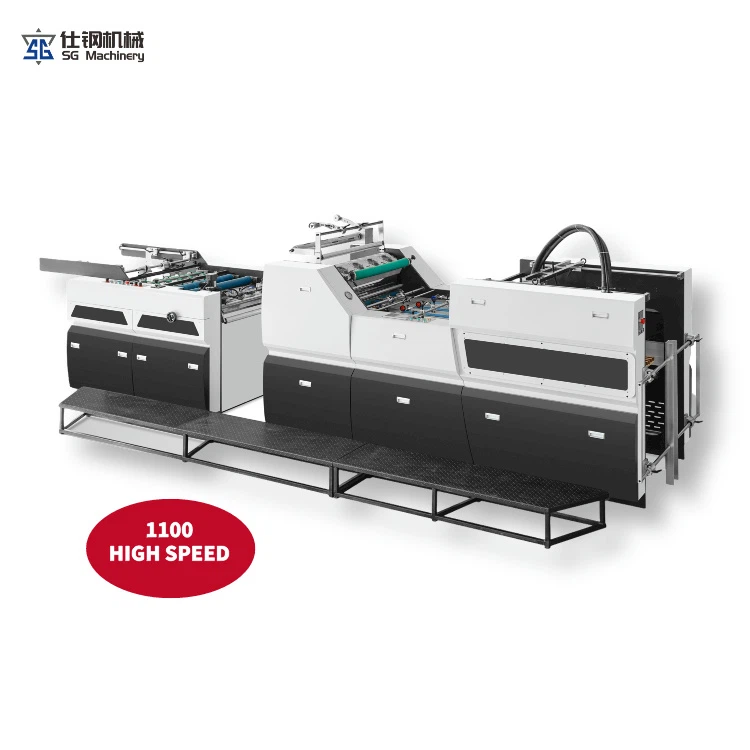
YFMB-1100, big paper laminator machine, is widely used in packaging and printing industries, which is suitable for small order, more flexible. Automatic separating film, more accurately and fast. The machine is used to protect the printed matter from pollution and damage , can improve the value of products. The machine is simple to operation, easy to maintain, and has high production efficiency in the same time. It is an ideal equipment for packaging and printing enterprises.

SG-AL520, the mini paper laminator. It is designed for small format printing or packaging. It takes up a small area, but has all functions. It has fully automatic paper feeding and receiving, making work efficiency higher and saving labor. It can operate several machines by one person, making it a good helper for small printing and packaging
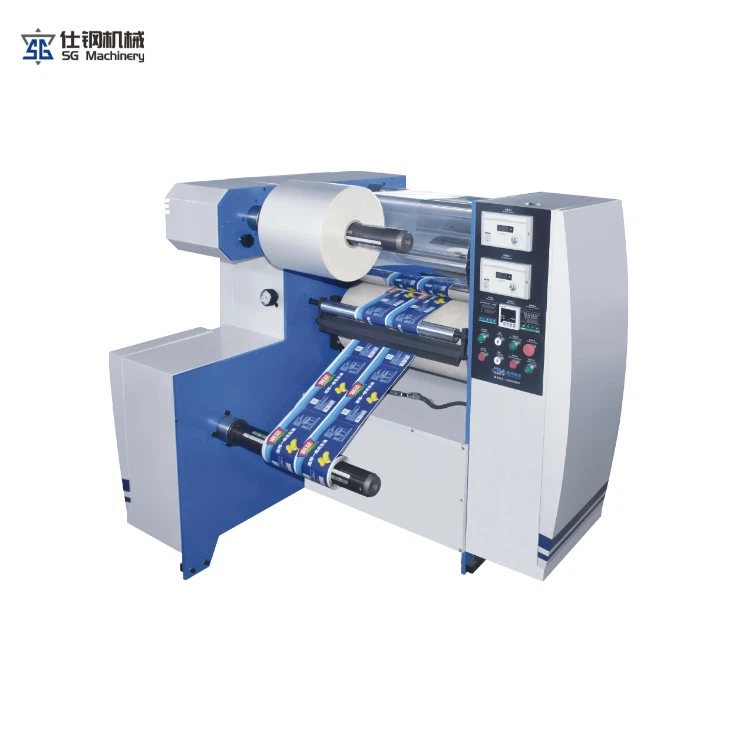
MG-RL520/600, the thermal roll laminator, which is a professional roll to roll laminating equipment that can be applied to materials such as label non-woven fabric and cardboard, providing waterproof and anti fouling effects, while greatly improving the brightness of the printing surface, making the product more beautiful.

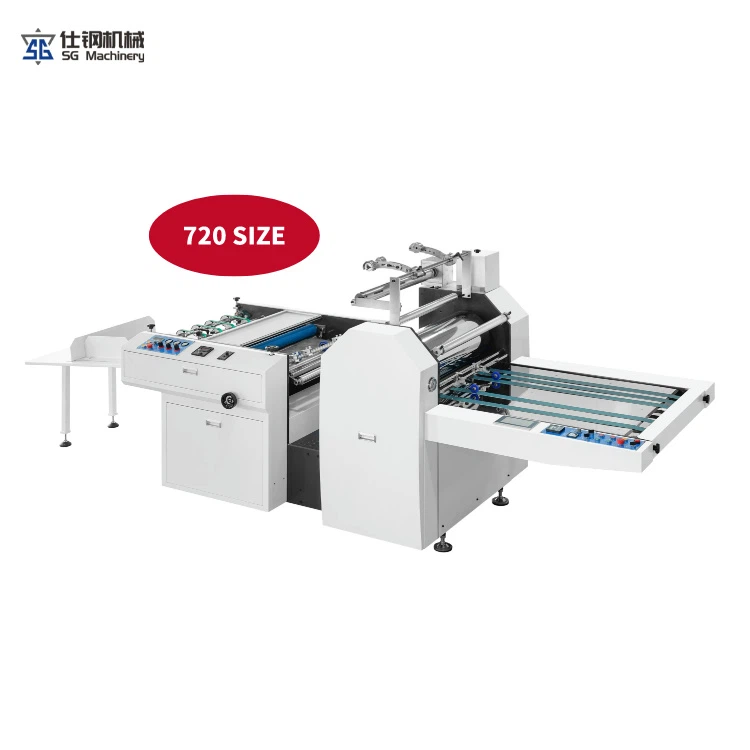
YFMB-720 flatbed paper laminator, small and exquisite. Manual paper feeding and automatic cutting are essential equipment for many packaging factories. With a width of 680 and a length of over 1 meter, it can be used in the rear of many large printing machines to protect printed materials and prevent water and dirt.
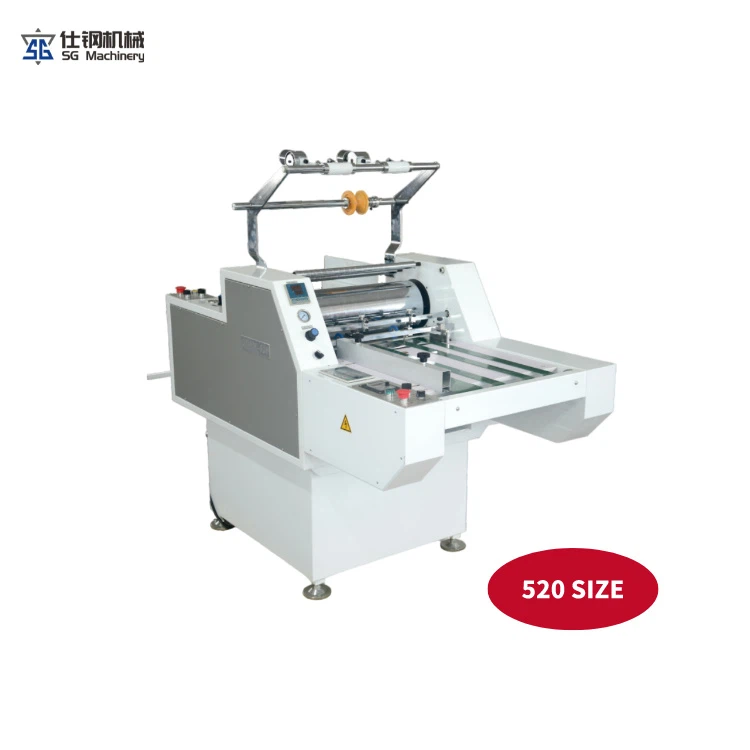
SG-SFL520 small laminator, a small semi-auto lamination machine, which is manual paper feeding, automatic cutting and receiving. Small footprint, but very comprehensive in functionality, suitable for small quantity or sample making

SG-ML520/390 manual laminating machine, it is a small laminating machine with a compact structure and small footprint, making it very suitable for use as a sampling device. Its greatest advantage is its ultra-high cost-effectiveness. Simple operation and fast return time are essential for every packaging company to make samples.

SG-FL1200A business laminator machine, which use pre coated or thermal film to finish laminating job. The size of 1200mm can cover most of the packaging needs on the market. The large drum also increases the efficiency of lamination. The characteristics of pre coating also make the operation of laminating easier and more user-friendly.

Automatic Thermal Laminating Machine
SG-FL1100 Automatic thermal laminating machine, it is a relatively large pre coating equipment. The advantages of high speed, high precision, high stability, and full automation make it a must-have for many well-known packaging companies. The ease of operation and aesthetic appeal of pre coated films make them a favorite among overseas customers.
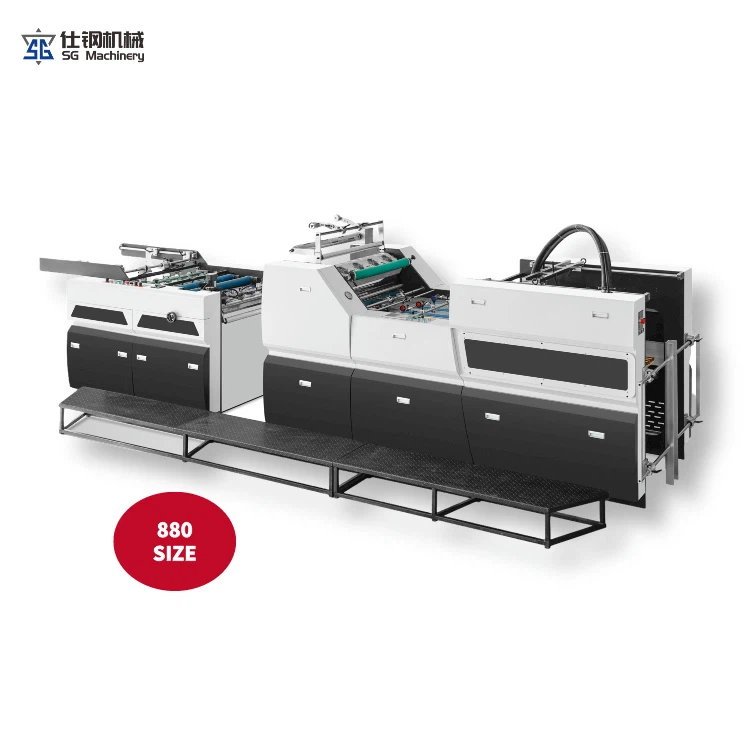
Autoamtic Hot Lamination Machine
SG-FL880 the automatic hot lamination machine, it is the best-selling model in this laminating machine series. The maximum size is 850x1050mm, and the minimum size is 280x280mm. It can be used for both large scale packaging and medium scale digital packaging. High precision and cost-effectiveness ensure the quality of film coating, while also allowing for short-term cost recovery.
What is Flatbed Paper Laminator
A flatbed laminator is a machine used in the printing and packaging industry for applying a protective layer or lamination onto flat surfaces such as paper, cardboard, or plastic sheets.
Benefits of Flatbed Paper Laminator
More Professional Look
Using laminating film will give your documents and materials a professional look, especially for name cards or posters.These items appear more polished and presentable, making them great for presentations or display in public areas. When someone takes the time to laminate items, it sends a message that the owner takes pride in their work.
Protect Your Documents
Laminating your documents, photos, and other materials using laminating film will ensure their durability. It's especially important for items that you handle frequently or use outdoors. The lamination acts as a shield against dirt, dust, grime, and fingerprints. Your laminated item can withstand the wear and tear of daily use without becoming damaged or discolored. This process seals your documents, photos, and other materials in a protective film that will keep them safe from water damage, dirt or grime. The lamination also prevents the tearing or creasing of the material.
Various Uses for Lamination
Different laminating film thicknesses can be used on a variety of documents, posters, and photos. The thicker laminating film, like a 10 mil laminating film, is extremely rigid and hard to bend according to Xiamen Inch Films Co. Ltd . It's usually used for ID badges, reference sheets, and menus that do not need to fold. Thinner laminating film can be used on documents or posters that require folding or rolling.
Reusable Materials
Laminating is a cost-effective way to protect your documents and materials. Laminating machines and professional services are available at a range of prices, so you can find one that fits your budget. Additionally, lamination will help increase the lifespan of your items, preventing future costs associated with replacing them.
Common Uses Of Lamination Machines
Preserving Memories
Protect cherished photographs, handwritten letters, and sentimental keepsakes from fading and aging.
Educational Materials
Teachers can laminate educational posters, flashcards, and teaching aids to extend their lifespan in a classroom setting.
Business Documents
Create durable business cards, ID badges, and important reference sheets that can withstand daily wear and tear.
Restaurant Menus
Laminated menus are not only more durable but also easier to clean and sanitize, an essential feature in today's hygiene-conscious world.
Presentations
Give your presentations a professional edge by laminating your charts and graphs. They'll be tear-resistant and look impressive in front of your audience.
Art and Crafts
Lamination can be a handy tool for artists and crafters. It's perfect for preserving artwork, creating bookmarks, or making personalized coasters.
Maps and Signage
Maps, directional signs, and outdoor advertisements benefit greatly from lamination, as it protects them from the elements.
The primary consideration you'll make before choosing a laminator is your document size, the purpose for usage, and how often you'll be using it.
Some of the most common varieties found in the market today are the A3 and A4 size laminators. A3 comes in handy where large materials such as posters need to be protected while the A4 is suitable for homes, offices, and retail institutions.
Most models are intended for daily school activities since they have automated functions that offset the need to have regular programming whenever you want to use it.
For industrial use, you should choose a laminator able to withstand constant use with enough durability to withstand consistent use and high-end performance.
While choosing the ideal laminator may require an initial colossal investment, durability, maintenance, and efficiency is always a worthwhile investment.
What's the difference between hot and cold lamination
When you think of lamination, perhaps the first thing you think of is Thermal lamination. Hot lamination occurs when a document is encased with laminate (often in the form of a laminating pouch) and is then fed through a machine that melts the adhesive on the film, thus bonding the laminate to the printed material.cold lamination is lamination that occurs without heat.Cold roll laminators use a plastic film which is coated with an adhesive and glossy backing which does not adhere to the glue. When the glossy backing is removed, the adhesive is exposed, which then sticks directly onto the item which needs to be laminated.
How to troubleshoot and repair the faults of the laminating machine
First inspect the external before inspecting the internal
The hydraulic press of laminated equipment is a mechanical and hydraulic integrated equipment, and in the event of abnormal operation, it can be reflected from the above aspects. When maintenance personnel inspect the equipment, they should first inspect from the outside to the inside, and investigate and handle the existing problems one by one.
Mechanical before electrical
Vacuum lamination equipment is a highly automated equipment, belonging to a category of mechanical processing equipment with relatively complex and advanced technology. When faults occur, mechanical faults are easier to detect, while system faults are more difficult to detect.
Public first, then private
When the laminated equipment malfunctions, its public issues usually affect the overall use of the entire equipment, while private issues only affect the local use function of the entire equipment.
First simple, then complex
When there are multiple faults in the laminated press equipment, they cover up each other. When there is no way to start, the corresponding solutions can be taken from the relatively simple faults first, and then the more difficult problems can be solved. In most cases, after solving simple problems, more difficult problems can also be easily solved.
Our Factory
Our customers are located all over the world, especially in the Middle East, Southeast Asia, and North Africa. Nowadays, customers in Europe, America, Japan, and South Korea are continuously grow up, and the proportion of sales is gradually increasing. I believe that in the near future, SG's footsteps will illuminate all corners of the world.

FAQ
Hot Tags: flatbed paper laminator, China flatbed paper laminator manufacturers, suppliers, factory, small laminator, automatic heat laminator machine, big paper laminator machine, commercial laminator, mini paper laminator, autoamtic hot lamination machine
Previous
Manual LaminatorSend Inquiry


